Understand how precast concrete pools work
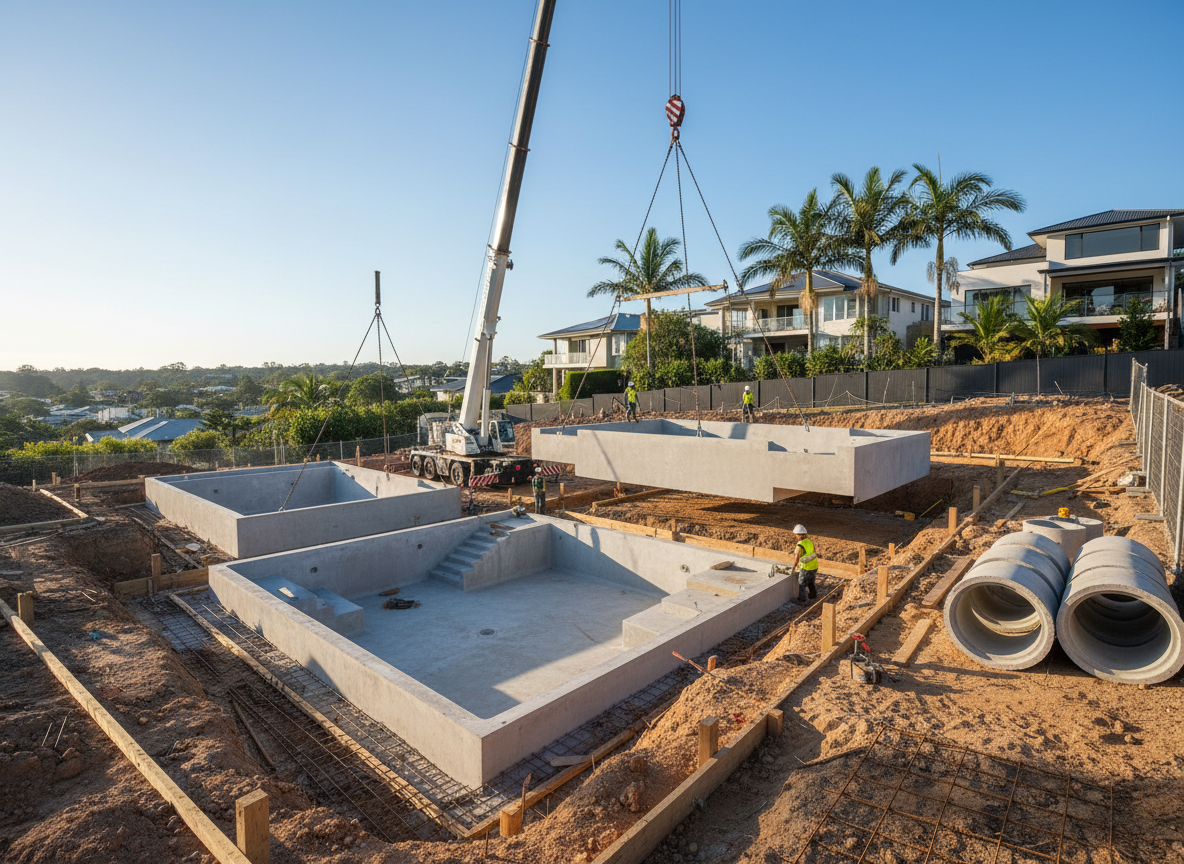
A precast concrete pool is a shell cast in a factory, trucked to your Brisbane home and lifted into a prepared hole by crane. Most of the build happens off site, so the backyard stage is usually shorter than a pool poured in place, though sizes and shapes come from set moulds.
Precast versus custom poured concrete
A poured pool is formed, reinforced and sprayed on your block, so its shape can follow the yard exactly. Precast trades some of that freedom for a quicker install and a shell that has cured before it arrives. Either way you end up with concrete rather than fibreglass, if that is the material you want.
Crane reach and site access for a precast pool
The shell travels from truck to hole in one lift, so the crane needs somewhere stable to stand and a clear path over the house, fence or trees. Power lines, steep driveways and narrow streets can all change the plan, and excavation machines still need a way into the yard.
Why cost depends on the block
The price of a precast pool turns on more than the shell itself. Crane size, lift distance, digging conditions, soil removal, plumbing, paving and fencing add up differently from one yard to the next. That is why a fair figure only comes once someone has looked at your property and its access.
Approvals, fencing and the finished pool
Like any pool, a precast shell sits inside a wider project that can include council paperwork, pool safety fencing and surrounds. Ask whoever quotes which approvals apply to your property and who arranges them, so crane day is not held up waiting on paperwork.
Next step for a precast pool in Brisbane
Walk the route from the street to the planned pool spot and look up for wires and overhanging branches. Think about side access and crane reach; no measurements are needed. Once the crane path looks clear, request a free quote here and a licensed and insured local contractor can follow up.
Precast Concrete Pools Services We Offer
✓Precast Plunge Pools
Compact precast shells suited to small yards and courtyards, where a lighter lift can make crane access simpler.
How it works
- 1
Check access and crane reach
Look at where a truck can park, where a crane could set up and what the shell must clear on its way to the hole, such as the roofline, fences, trees or overhead wires.
- 2
Excavate and prepare the base
The hole is dug to suit the chosen shell and given a firm, level base so the pool sits evenly once it is lowered in.
- 3
Lift the shell into place
The crane lowers the precast shell into the hole, where it is checked for level and position before anything is connected.
- 4
Connect, backfill and finish
Plumbing and filtration are connected, the sides are backfilled as the pool fills, then coping, paving and safety fencing complete the job.